

From the desk of Daniel “Pinecone” Verona
Hear me out.
Peeling back the layers of a car to society’s most basic perception of it, there is a special commonality between Honda’s long-standing family hauler and the winged V12 monster from Modena.
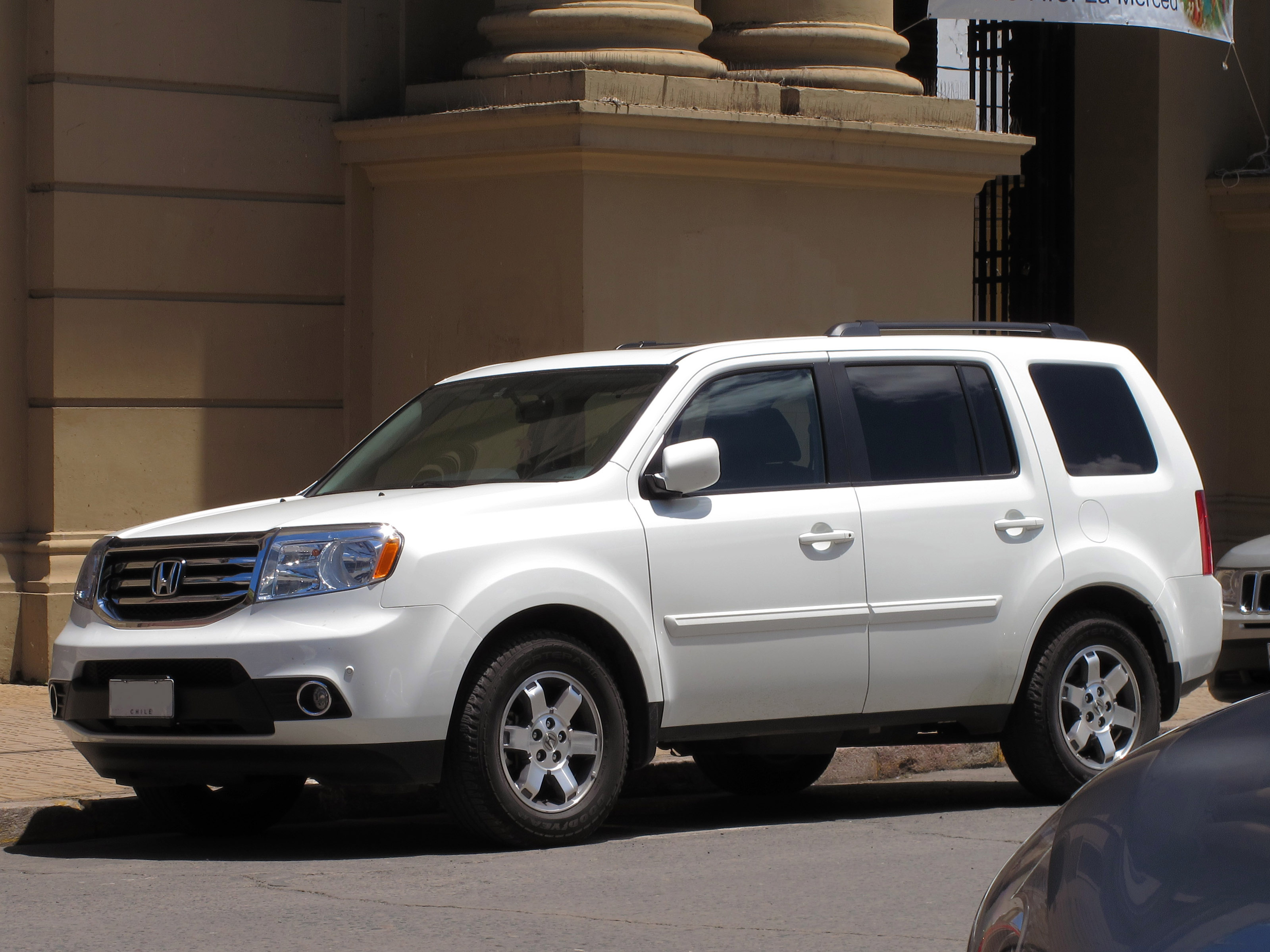
A substantial part of my life thus far has been spent in the front seats and rear benches of the humble Honda Pilot. My mother bought the car new-used in 2014, fitted with the Touring trim package, 2-tone brushed alloy wheels, and pearl white paint that holds no interest for the untrained eye. This machine has been the backbone of my family’s mobility for nearly a decade, and continues to fight tirelessly through years of harsh winters without missing a beat. Unless, of course, you consider a PCV system, ABS pump, shocks, or the ever-present rust problem a “beat” of some kind. These occasional setbacks have seemingly no effect on the car’s enduring powertrain, the specs of which are not to be overlooked. Independent suspension? J-Series VTEC power? Variable 4WD and a locking center diff? In this economy? Apparently so. And not to mention, this eight-seat walk in freezer nearly matches a GT-R in the weight department.
Overall, flawless vehicle.
But none of that matters in our current comparison. I prefer to look at cars down to the most basic perceptions they influence, and, in this case, that casts the Pilot in a similar light to something incomparable. I have found myself in conversations over how both the humble Pilot and exquisite Huayra are sorts of “borderline vehicles”. Given its specs and near-total superiority over most contemporary examples, the 2nd generation Pilot truly blurs the line between the crossover and SUV segments, which seem to hold subjective definitions to each who mention them. This defines it as either a sturdy option for lower-level 4WDs, or simply the world’s best crossover. Given all that this wonderful vehicle has endured in family duties, I argue the latter.
Whether you choose to believe Top Gear segments or the Forza Horizon car sorting, deciding if the Pagani Huayra is a supercar or a hypercar has been a matter of global debate for centuries. This often sparks a more heated debate on what defines each side, but this is best determined by looking at more widely-accepted examples. Compared to a well-defined supercar such as a Murcielago, the Huayra is vastly more powerful and peppered with active aero bits. But placed with any of the holy-trinity hypercars, such as the P1 from McLaren, it is far more refined and comfortable, with a massive, low revving engine clad in exotic materials, and an equally posh interior. There are many more examples of cars that become so hard to define, but perhaps this is one of the most stark.
So I think it’s fair to say, any crossover roped into similar arguments as one of the greatest modern supercars has earned its honorary SUV status.
Was this thought worth its value in words? Good question. If you made it this far, I’ll leave that up to you.
Leave a Reply