

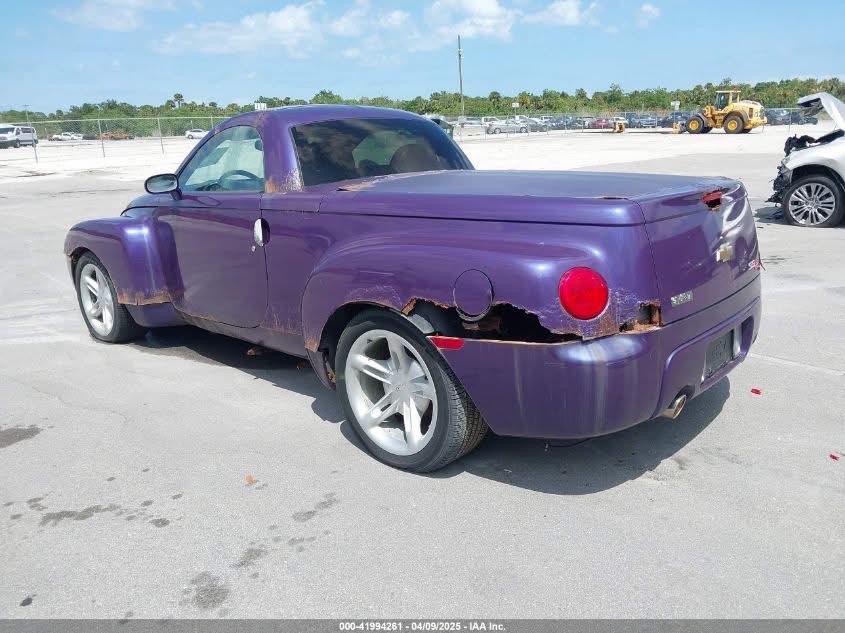
We here at Mis-Shift into My Ass do not usually talk about anything seriously, but more reputable magazines don’t have access to this information yet. How do they not have this information? Mostly because they haven’t talked to the 20 or so people in the world that even know this is a real thing. I somehow have happened into being one of these people.
I write for the northern branch of MSiMA, which means I live in the rust belt. Owning anything made of metal up here is a constant battle against the elements, as the road salt and perpetually damp weather have turned everything into a galvanic cell (or a battery). As a person who lives here, that makes me the small child who swallowed it. But what if that didn’t have to be a reality. What if the rust was optional?
In this series, I’m going to take you through my actual research into the world of corrosion resistance. And by research I don’t mean I’m pulling crap off of Facebook or asking an AI, this is the subject of my masters thesis. There will be citations.

Cold Sprays
Cold sprays are the current cutting edge in corrosion prevention. It was created by the U.S. military to be an incredibly safe and cost effective way to create a long lasting shield against the many things that can oxidize metal. It works incredibly effectively against all kinds of corrosion, and has even begun making an appearance in civilian applications. And I cannot understate that it is safe.
A properly applied cold spray is nearly unmatched in effectiveness, as it can form a nearly perfect layer on a substrate and can be done with a wide variety of metallic compounds including but not limited to zinc, aluminum, and titanium. Cold sprays also work on a variety of substrates, although different substrates and applications will require different metals to be used in the spray.
Cold sprays work much in the same way paint does, just better. The spray itself is not a mist of liquid, but a fine metal powder that is sprayed onto a metal surface, sometimes at speeds exceeding super sonic. The term “Cold Spray” is meant to say that the spray is well below the melting temperature of the metal being sprayed (so like 25°C to well over 1000°C), not that the spray is what we as humans would perceive as cold [1]. Something cold for Zinc is still probably more than hot enough to set you on fire, you pathetic meatbag.
On impact, the particle deforms to perfectly match the shape of the surface it impacts, binding it with a remarkable amount of strength. This process sounds fancier than it is, an easy way to picture what is happening is to throw a jello cup at a wall as hard as you can. The jello cup is the metal particle. If you through enough of these tiny little jello cups at something you eventually can get a nearly perfect coating with substantial thickness and density, and cold sprayer throw a lot of jello cups at their target [2].
Cold sprays work in two different ways, they block corrosives from making it to the metal, and they make the metal not want to corrode. The first one makes sense, its the same way paint works, it just sits there and says good luck getting by. And its real good at it too. When applied correctly, the coatings can have 1/10th the pores that you would see in a more conventional anti-corrosion coating [3].
Better yet, when that Hiwa study took a cross section of the coated material, they saw that no pores made it to the metal it was protecting. What that means is not only is there less holes than you’d see with other methods, but the holes don’t go anywhere either.

Its also a chemical barrier, because metals are annoying like that. Rust is a very specific type of chemical reaction known as a “galvanic reaction”. If you’ve taken a chemistry class at any point, those are the reactions that require a lot of math and are even more painful than usual. I don’t like thinking about them either, but unfortunately they’re a part of this shit. Without getting into too much detail, galvanic reactions deal with the transfer of electrons from one metal to another, with the metal losing the electrons gaining some less than helpful hitchhikers. Usually oxygen. Much like how your dead beat cousin takes up space on the couch and gets in the way of everything, these new atoms ruin the material properties of whatever metal they are on.
Galvanic protections against corrosion try to mess with how the electrons flow. Some methods involve creating a circuit so the electrons groove with that, some methods just tape on another piece of metal that’s even better at losing electrons, and some disrupt the reaction entirely. Cold sprays do the latter two. Depending on the metal used you’ll get different effects. Metals like Zinc are super willing to corrode, so they typically sacrifice themselves for the greater structure. Its a short term success but it works and zinc is on the cheaper side [4, 5].
The more interesting thing is when it messes with galvanic resistance. Aluminum, Titanium, and Tantalum are really good for this [2].
Remember how I said that galvanic reactions are the result of electrons moving from one chunk of metal to another? Well that also happens to be exactly how an electrical circuit works. Literally, batteries work as a result of a galvanic reaction. In an electrical circuit, if you want to slow down the flow of electrons you just increase the resistance of the circuit, so that’s what a cold spray does. In fact, its so good at it that it can reduce the flow of electrons to a fraction of what would happen if uncoated. And with less electrons flowing, the less corrosion can happen. The table below shows you the exact results from a study done on this by Daroonparvar et al., with Ecorr representing the voltage or driving force of the corrosion, and icorr representing the volume of electrons flowing through a given area.

Daroonparvar et al.
The binding process for this works better than you’d expect too. One study found that when impacted, the zinc will not separate from its substrate. In fact that study found that the only way to get the zinc to separate from the substrate is to damage the substrate. In this case it ended up being rust that hadn’t been properly cleaned that broke off. This makes it useful for more than just corrosion, the coating has the properties of whatever metal is is made of, most notability its wear resistance (or hardness for you metal dorks out there). What this means if you could add a cold spray coating of Titanium onto a brass door hinge, and the surface of that hinge will be as hard as aluminum. In practice that’s a terrible use for this, door hinges don’t take that much loading or have that much abrasive wear, but your hip joint sure does. Since plastics and the like are so much easier to work and make one off parts out of, you could make a hip replacement out of plastic, and then coat it with titanium or aluminum so it won’t wear as easily [1, 6].

Not actually what we’re doing, this is just a normal hip replacement
If you want to get even weirder, its an additive manufacturing process. You can make things with it. The other big additive manufacturing process you might have heard about is 3D printing (if you haven’t its a real thing that I don’t have time to get into, but leave a comment and I’ll write an article about it). Cold sprays work in the same way as 3D printing, leaving layers of material on a surface until it makes something. These layers are just a lot thinner, making it a bit inefficient for making a whole thing. But it sure can fix stuff.

It can’t fully restore something to how it was, but you can spray on a cold spray coating and it is strong enough to get a abrasively damaged part up to about 85% of its original strength, and fully restore its geometry. According to Dayı and Kılıçay that was a reasonable improvement over the damaged parts. This weakness comes really from the coating being a coating, and not actually bonded with the metal its on. Back when I was a machinist, there was a mythical substance known as “add-a-thou” spray, which you could use to add material to something you over cut. Apparently it exists now.
The weak point of the cold spray, its a shield but it doesn’t always stop anything, and if rust is already there it can’t fix that. So long as you can perfectly coat (actually pretty easy the equipment is very well made) on a rust free surface (does not exist) it will work perfectly. If you spray it onto something that already has rust, you sure won’t see any rust. It’ll still be there, just under a clean layer of whatever metal you schlapped on there. Of course, you could just clean the surface you’re coating. That does work, really well in fact. Cleaning the surface before applying any sort of anti-corrosive coating is always a very good idea, but cold sprays especially benefit from this as the rust is a very weak substrate and creates a very poor structure for the cold spray[7]. Once you remove the rust, the cold spray works amazingly well. This idea of cleaning the surface may make some more appearances later in this series, as any treatment can benefit, even the weird stuff I’m working on.
Told you there would be references.
[1] A. Vilardell, N. Cinca, A. Concustell, S. Dosta, I. G. Cano and J. Guilemany, “Cold spray as an emerging technology for biocompatible and antibacterial coatings: state of art,” Journal of Material Science, vol. 50, pp. 4441-4462, 17 April 2015.
[2] M. Daroonparvar, M. Farooq Khan, Y. Saadeh, C. Kay, A. Kasar, L. Kumar, M. Misra, P. Menezes, P. Kalvala, H. Bakhsheshi-Rad and R. Gupta, “Modification of surface hardness, wear resistance and corrosion resistance of cold spray Al coated AZ31B Mg alloy using cold spray double layered Ta/Ti coating in 3.5 wt % NaCl solution,” Corrosion Science, vol. 176, November 2020.
[3] Y. Hiwa, T. Shimozato and Y. Tamaki, “Denseness and Adhesion of Low-Pressure Col Spray Coating to Corroded Steel Bridges,” International Journal of Steel Structures, vol. 24, no. 1, pp. 109-117, 27 January 2024.
[4] D. Dzhurinskiy, E. Maeva, E. Leshchinsky and R. G. Maev, “Corrosion Protection of Light Alloys Using Low Pressure Cold Spray,” Journal of Thermal Spray Technology, vol. 21, pp. 304-313, 13 January 2012.
[5] M. A. Baker, W. Gissler, S. Klose, M. Trampert and F. Weber, “Morphologies and Corrosion Properties of PVD Zn-Al Coatings,” Surface Coating Technology, vol. 125, no. 1-3, pp. 207-211, 28 February 2000.
[6] S. C. Dayı and K. Kılıçay, “Repairing Al7075 surface using cold spray technology with different metal/ceramic powders,” Surface and Coatings Technology, vol. 489, 15 August 2024.
[7] T. Hatori, H. Saito, Y. Ichikawa, K. Ogawa, Y. Kato, K. Motomura, M. Nakano and N. Yamashita, “Suggestion of a New Repair Technique for Steel Structures by Low-Pressure Cold Spray and Laser Cleaning,” Materials Transactions, vol. 64, no. 10, pp. 2515-2522, 2023.
Leave a Reply